4/4/11

Wedding Anniversary Jamaican Vacation

We were so excited to have one of our fabulous members, Katrina, share with us pictures of her second wedding anniversary vacation.

Katrina and Perry, who are from New Orleans (NOLA), celebrated their second wedding anniversary at the Sandals Grand Riviera AKA Grand Ocho Rios in Jamaica. 

According to Katrina, there's lots to do: multiple restaurants, bars, various water sports, golf, and so forth.

Some of the pictures below capture the wonderful stay. In case you're wondering, we are jealous.

Yay to celebrating interracial love!

One Heart. One Love.


On cloud 9!


Ocho Rios, Jamaica


Is the water really that blue?


Did you really think we'd post something without food?


We'd never forget dessert!


Boat tour to work off some the wonderful meals


Pure HOTness!!!


Laughing.our.butts.off. Gotta love a man with enough sense to check out his wife.


Guess it worked. She gave him the goods. :)


Anniversary dinner. Love that she tied in her wedding day by wearing the same hair piece.


3/30/11

Kosher Tex-Mex Barbecue Craving

Every once in a while I get a serious craving for barbecue. Not because I love it so - no. More because I'm a nut job. Anyway, that's another story altogether. Back to the food. I'm always craving this food, but know that I generally have only a handful of options since I don't eat pork and eat chicken every once in a while. I wanted ribs so I begged the hubby to find a good restaurant within a reasonable driving distance from our place *aka a maximum of 10 hours ;)*. He delivered with Smokey Joe's Kosher Tex-Mex Barbeque.

I. Kid. You. Not. Kosher Tex-Mex. Even if I wasn't in the mood for ribs, there was no way I would have passed up the chance to experience Kosher Tex-Mex.

We took the drive to Teaneck, NJ barely able to contain our excitement - when I say we, I really mean me. Hubby's not as easily impressed. Anyway, it was as interesting as I thought it would be. Outside of the waitstaff, we were the only non-Jewish individuals in the restaurant. Nothing new. We're used to being "the only ________" almost everywhere that we go.

Dinner was good, but the experience was better. The best part being listening to the yarmulke-wearing-20-somethings singing Rihana's Umbrella as they left their table. I. Love. America.

Cornbread and Onion Jam Spread. Oh this was so tasty --- especially if you're like me and like the chunks of corn in your bread.


Appetizer: Sausage Sampler. We chose the Lamb Merguez and the Turkey Sage. I'm still salivating over the lamb. According to hubby, we're going back just so he can get a Sausage Sampler as his main course.


Dinner (Mine): BBQ Sampler Plate. I chose the Brisket and Chicken option and added the Rice and Beans as a side. Hubby at my chicken because I didn't really like it. I enjoyed the brisket, although I would have preferred the traditional Jewish one (they were out). I would not recommend the side.


Dinner (Hubby): Homemade Meatloaf. I pretty much devoured his meatloaf. I loved it so.


Next time we go, we're taking the whole family - on my hubby's side. Maybe, he'll wear his Star Wars shirt again. We can only hope.


3/15/11

Why is there no looting in Japan? aka Why are the Japanese so much more civilized than the barbarians of African ancestry?


A recent CNN article poses the question Why is there no looting in Japan? in the aftermath of the devastating earthquakes and tsunami.

The article juxtaposes the behavior of the Japanese with that of the Haitians who also faced a devastating earthquake, and the Americans who faced the hurricane Katrina. The author asks people to weigh in on why it happened in Haiti and Katrina and not Japan. 

Some of the responses that are indicative of what little progress we've made in race relations are noted below:

Kim:
Because Japanese culture, unlike all other modern cultures, is based primarily on honor and dignity. Unlike our Katrina disaster, the Japanese don't see this as an opportunity to steal everything in sight. The so-called civilized world can learn much from the stoic Japanese. 

Natasha:
The Japanese are resourceful, innovative and disciplined people with a great sense of national pride. While they also have criminals and felons, it is not quite in comparison to the sleaze balls we have in our streets. It was disgusting to watch these scum bags loot stores in New Orleans during Katrina when they should have helped their fellow citizens in need. While watching the devastation in Japan is heart wrenching, it is so refreshing to see the civility of people within the calamity they are facing.

We have a theory of our own. 

EIRIC:
Maybe there's no looting in Japan because they have enjoyed a very prosperous economy for years and very few of their citizens know and understand what it means to live without food on a daily basis - even in the absence of a natural disaster or any other large scale emergency.

We're always interested interested in answering social science questions and hearing the perspective of others, but not when they're inflammatory just for the heck of it.


All photos courtesy of Google and CNN.

2/20/11

Blake Griffin believed he could fly enough to dunk over parked car. The real question is, how the heck did they just roll the car up on the court?


Biracial cutie Blake Griffin, who is said to be of Haitian-American and Caucasian descent, wins the 2011 Sprite Slam Dunk Contest.

Although not the most impressive shot of the evening (cue Washington Wizards' JaVale McGee and dunking on two baskets at once), it was certainly the most theatrical (sorry to Oklahoma City Thunder's Serge Ibaka, the bear and the cute Asian kid with the fly Mohawk).

Griffin's hilarious slam-dunk coach Kenny Smith rolled out the theatrics with a Kia, a Crenshaw choir singing R. Kelly's "I Believe I Can Fly," and a gleam in his eyes like a kid who was just about to get away with sneaking a piece of candy at church.

LA Clippers rookie Griffin comfortably cleared the car's hood to make the dunk, with a surprise appearance from teammate Baron Davis who popped out of the Kia's sunroof.


His reportedly close-knit family must be so proud. His father was a basketball center and track standout at NAIA Northwestern Oklahoma State University. Griffin and his older brother, Taylor Griffin, were home-schooled by their mother from first grade until Taylor was in the tenth grade and Blake was in eight. They certainly did a good job as parents, if Blake's humility is anything to go by.


Sources (including photos): 

http://en.wikipedia.org/wiki/Blake_Griffin

http://sports.yahoo.com/nba/blog/ball_dont_lie/post/Grading-the-2011-slam-dunk-contest?urn=nba-323833

http://sports.espn.go.com/los-angeles/nba/news/story?id=6140773

http://sports.espn.go.com/ncb/ncaatourney09/columns/story?columnist=katz_andy&id=4011288

http://nytwitter.blogspot.com/2011/02/blake-griffin.html

http://ethnicelebs.com/blake-griffin

7/14/10

EIRIC™ Talks About Race With Author Angela Dion

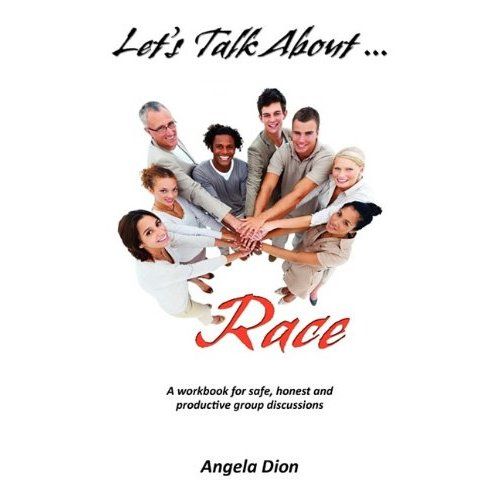
We’re so excited that Ms. Angela Dion, the counselor, successful author, professional writing coach and motivational speaker, recently took time out of her busy schedule to chat with us and discuss her current book Let's Talk About Race (http://www.everythingiric.com/index.php?option=com_mtree&task=viewlink&link_id=1847&Itemid=2).

Below is the full interview. After reading the interview, please take a moment to visit her site (http://www.dioncommunications.com/) to learn more about her work.

                          *** S-T-A-R-T *** I-N-T-E-R-V-I-E-W ***


1. You touched upon growing up in a "voluntarily segregated" section of Maryland. Please share a little more about our childhood there.
I was raised in Loveville, MD, population 500. I don't think I knew that we were voluntarily segregated until I moved out of the state. Basically, the black people staying on one side, the whites on the other. No one questioned it or had a problem with it - maybe they didn't even notice it.

2. What impact did your father’s words – “never trust white people” – have on you growing up?
Fortunately my mother taught me to not look at color but character. I knew my father had a deep mistrust of white people, his stuff from his past, and he wanted to protect me. 


3. How did you learn to “trust white people” enough to marry one?
It was difficult for me to trust anyone fully - white or black, again my father's influence. Marc and I became friends first and over time I learned to trust him and love him.

4. Congratulations on being married for over twenty years. As a newlywed, I am in awe. What was your first impression of your husband Marc?
I thought he was a nice guy and a great listener. Neither of us was interested in dating the other. In fact, we were both dating other people when we met.

5. Did you date outside of your race/culture before getting together with him?
No

6. Did Marc?
No

7. What has been the most unusual reaction to your relationship?  
I think it's weird when people assume we're not together - happens a lot when we go to restaurants. Most unusual was in South Carolina when we basically stopped all conversation and everyone just stared at us.

8. Do you get "looks" from people because of the racial/cultural difference in your relationship?
Sure

9. Do you get more "looks" from black or white people? Young or Old?
Probably older, white men. I don't know for sure though.

10. Truthfully, how was meeting the family – on your end and his? 
My mother was the most supportive - she likes to tell people that she always knew I'd marry a white man. My father never really warmed up to Marc - he was out of my soon after we got married (not because of Marc, but his stuff), he died before our son was born. The rest of my family "tested" Marc with a poker game - he passed and won all their money! Marc's family is a lot quieter in general.

11. How did you feel when you first heard your mother-in-law refer to black people as “colored”?
I felt angry, felt like she was a racist, felt she was insulting, hurt that Marc didn't defend me.

12. How do you feel about it now?
She needed to be educated, she doesn't say "colored" anymore so I'm educating her about Puerto Ricans now - think I'll be correcting her racial slurs forever.

13. How did your in-laws react to your relationship?
My father-in-law is so reserved, I didn't know. When my son was born though, we got to see the proud Grandpa (Marcel is his first and only grandson). He and Marcel (now 19) have a wonderful relationship. My father-in-law is a great example of how children can soften any heart. My mother-in-law and I have a wonderful relationship now, it took some time but I think at the core she knows I love and respect her son.

14. Did you hold a race discussion with your in-laws or your family before or since getting married? Tell us about it. 
A million of them, with everyone. educating my mother-in-law, dispelling myths about white people with my family, showing how marriage words regardless of race, showing the love of God regardless of race, so many examples.

15. Why do you think so many people – especially those in close personal interracial relationships – seem uncomfortable discussing race?
I don't know if those in close interracial relationships are especially uncomfortable. People are afraid they'll offend, be offended, say the wrong thing, be perceived as a racist, lots of fears about being honest about race

16. Paint a picture of the first weekly discussion that prompted you to write "Let’s Talk About Race".  
No one knew quite what to expect. We asked why everyone came and what their fears/expectations were. That was a great ice breaker. We were in the honeymoon phase then (I discuss different group phases in my book) so no one wanted to rock the boat. We just got to know each other better and we each answered the question, "When did you first become aware of different races?"

17. Based on your experience, who tends to be the least receptive to discussing race?
I don't know that there is a type, but discussions are more difficult with those who are sensitive emotionally, have an agenda to push, or think they're right and have nothing to learn.

18. Based on your experience, who tends to be the most receptive to discussing race?  
It's easier when respect and rapport is established in the relationship, I encourage people to try to assume the best instead of the worse in other's motives. Also, those willing to listen and learn.

19. What are some actionable steps for starting a race conversation with friends or family?
Again, there so much, something as simple as watching the movie "Crash" and going to a meal for discussion after - I have sample questions in the book to spark discussions. Also something as simple as noticing how people sit at a business meeting of a news item can spark a discussion.

20. Choose an audience and describe a typical "Let's Talk About Race" seminar. *Audience examples: Small Business, Local Church, Recently merged interracial stepfamily...   
For any group, I share my story and how I got here. Then I start with some ground rules for discussion: agree to disagree, assume the best, no agendas, confidentiality, respect (I have an entire chapter of rules in the book). Then we have a discussion - for a business we can talk about perceptions of management, what's working/not working for an organization, etc. For church - the stats on church segregation, practical steps to integrate, what's the fear. For stepfamily - expectations of blendedness, any hidden feelings that need to be expressed (I have experience with family counseling so the issues might center on more than race). Of course I'd let them all know that one discussion is not the solution, but many discussions over a period of several months (maybe even years in the case of the family) work best.

21. What other projects are you working on that will be of interest to our audience? 
Available to speak about race/diversity specifically concentrating on colleges - how to cope with race on campus for students and professors, living with your "different" roommate, unlearning what your parents taught you about race and churches No More Segregated Sunday program for churches who want help becoming more racially diverse. 


                    *** E-N-D *** I-N-T-E-R-V-I-E-W ***